Monday, February 27, 2012

Good news on the writing front!

My essay/memoir, "Baking Day," won Second Place place in this national competition! 


Here are some details about the contest: 


"Write an essay or memoir that catches our eye, touches our heart, or tickles our funny bone, and you could win one of our great prizes! Only original, unpublished works of 1,000 to 1,200 words will be accepted.


The Writer, in collaboration with Gotham Writers’ Workshop, invites writers to enter The Writer 2011 Essay/Memoir Contest with guest judge Lee Gutkind.

• Second Place: $300 (USD); enrollment in a four-week How to Get Published seminar taught online by a literary agent and Gotham Writers’ Workshop ($150 value); publication on WriterMag.com; and a one-year subscription to The Writer."

In this case, given the title of my memoir, "Baking Day," I guess it would be appropriate to . . . 


Description of Gotham Writers Workshop

From Wikipedia, the free encyclopedia
Gotham Writers' Workshop is the U.S.'s largest adult-education writing school. It was founded in New York City in 1993 by writers Jeff Fligelman and David Grae and currently offers courses both in New York and on-line. Recent faculty include novelist Charles Bock, science fiction writer Michaela Roessner, playwright Richard Caliban, memoirist Kathleen Finneran, memoirist Marie Carter and the travel writer Douglas Rogers.
Gotham Writers' Workshop has produced three books, edited by their Dean of Faculty, Alexander Steele: Writing Fiction, Fiction Gallery, Writing Movies.
 Thanks to:

Saturday, February 25, 2012

All About Space . . . in my own backyard


I am so lucky to live where I do . . . tonight there was a concert at the university celebrating celebrating USU's 50-year involvement in the space program - - - complete with narration by former Senator Jake Garn, a real champion of the space program, and great space-themed symphony music (including selections from Star Wars, The Jupiter Symphony, and 2001: A Space Odyssey), and even a cameo appearance by Darth Vader himself. A very unique concert.


Friday, February 24, 2012

Ever feel like this?


What I love is how this mother duck and her chicks get back on their feet and keep going. 

Friday, February 17, 2012

I live in a valley of heroes

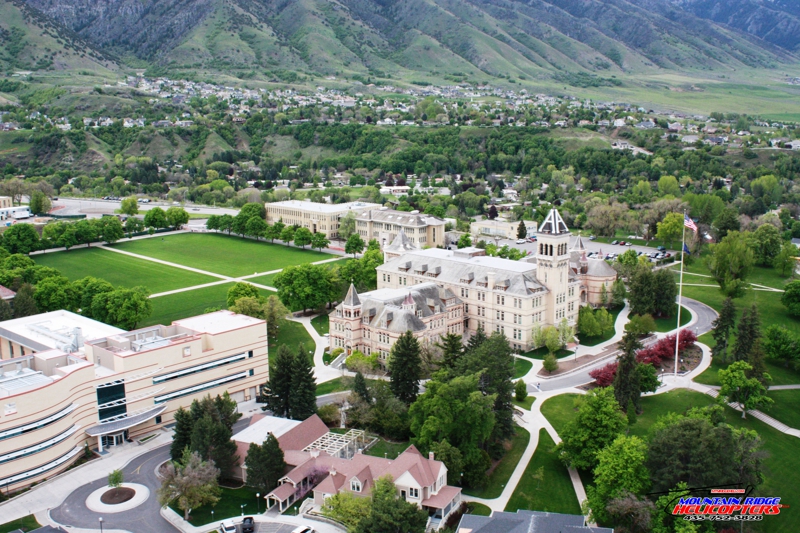
aerial view of Logan, Utah (Utah State University Campus)


A Valley of Heroes
I live in a valley of heroes. I get teary-eyed just thinking about it, especially in light of recent events. Cache Valley, located in northern Utah, is known for its agricultural roots, Utah State University, Aggie Ice Cream, mountains, cheese, honey, basketball, football, and especially for its people.
                                        
favorite landmark in Wellsvile, Utah

Today I’d like to reflect on the people.

There are everyday heroes who perform small, quiet acts that never get reported in the paper. You know who you are. You’re the woman whose best friend’s husband was killed in a tragic auto accident, leaving a young family of three children without a husband and father. You quietly set up fundraising efforts, spread the word, and gave some much-needed comfort and support to the grieving family.
Thank you.

When I was twelve, I was with my mother when she got a flat tire. A man stopped immediately, pulled out his jack and wrench, and quickly put on our spare tire. We tried to thank him. All he said was “Christensen’s my name, ma’am. You have a good day,” before he got in his own car and drove off.
Mr. Christensen, I haven’t forgotten you.

I have always considered the late Logan High principal Allison Dunn a hero. Not only was she a treasured friend and cancer survivor, she kept an eye on my boys at school and watched over them during some rocky years; they had great respect for Mrs. Dunn. Just months after she was declared cancer-free, the disease came back with a vengeance, and she lost her battle, never even reaching age fifty. I tried to tell her how much she had meant to me and my family, and I think she understood, during some of the quiet afternoons we spent together near the end. It was my privilege to be there. She remarked that buttermilk and Melba toast were the only foods that appealed to her, one day I brought buttermilk and Melba toast to her. When I opened the refrigerator, it was full of cartons of buttermilk; boxes of Melba toast were stacked on the counter.
Allison, thank you for being a wonderful, strong woman.  

Several years ago, a man delivering our newspaper smelled gas in front of our house early
One morning.  He rang the doorbell and woke us, the gas company was called, and the leak was soon repaired. We weren’t harmed in any way; he prevented that from happening. I don’t think we even knew his name, and for that I apologize.
You know who you are, though. Thank you.

Last September, an auto and motorcyclist collided just a mile away from my home, on a busy highway next to the Utah State University campus. The motorcycle burst into flames. Its driver was unconscious and trapped under the car. Nearby construction workers and students ran to the scene. They quickly decided they had to lift the car off the injured student. With a coordinated effort, they did, and another student quickly pulled him to safety. There was no doubt, officials said; he would not have survived if people hadn’t intervened quickly. His injuries were not life-threatening, though he’ll undergo quite a bit of therapy for some fractures. An USU employee was preparing to film a classroom lecture nearby when he heard the crash and the commotion. He grabbed his camera and began to capture the rescue. That video went viral. Many people were astonished and impressed and touched when they watched it.

student rescued from fiery crash
The family of the victim issued this statement: “Brandon and our entire family would like to express our deep gratitude to all of the people who stopped at the crash scene on Monday to help rescue Brandon. The fact that so many people would risk their own lives to save Brandon is a testament to the spirit of the community, and we will forever be thankful for these angels saving our son.”
Brandon Wright speaks from hospital about his rescue 


 Thank you to the everyday people who ran to help, for showing us that everyday people can accomplish great feats.

On January 31, 2011, Roger Christensen was driving two of his children and one of their friends to our local ski resort for an afternoon of skiing. Though the drivers in the canyon that afternoon were slow and cautious, the roads were treacherous. Roger saw a van slide off the road in front of him. The driver was able to maneuver her van onto a nearby bridge before it stopped, to avoid collisions. Roger gently tapped his brake to determine if he could stop if necessary. Instead, his car went off the road, plunged down a ten-foot embankment, and flipped upside down, landing in the frigid Logan River, where it rapidly began to fill with water.
site of Logan Canyon crash


Some of the front windows had shattered, Roger remembers, and he was able to get out of the car and catch his breath, but he could not reach the children strapped in their seat belts, one in a toddler seat, upside down, in the back seat. The doors and windows could not be opened. He hardly had time to feel frantic, he says, because within seconds, other people pulled over, saw him desperately trying reach the children, and scrambled down the embankment, where they jumped into the icy river to help.
When Roger’s car slid off the road and into the river, there was no time to wait for help. Paramedics could not have arrived in time to rescue the children. The strangers who stopped knew time was of the essence and simply did what was needed. One man later reflected that he didn’t even remember jumping into the river.
"Within five seconds there were eight men in the river, three to four feet deep water, and ready to assist and help in any way," Roger said.

rescuers 

As a team, they used all the strength they could muster and flipped the car over. One man who helped turn the car over said that as they struggled in the water, he suddenly felt someone very strong behind him, pushing, but when the car finally flipped and he looked back, there was no one behind him. He feels that was one of many miracles that took place on milepoint 474, Highway 89, that afternoon.
 A private bodyguard and former law enforcement officer instructor who specialized in weapons training was one of the first to plunge into the river. He pulled out his handgun, (he carries a legal permit) and shot out the back window. Two children were quickly pulled out of the car, blue and not breathing. They were handed to more rescuers on the side of the road. The third child was taking gasps from a pocket of air above her head, but could not unclasp her seat belt. The man with the handgun also had a pocketknife; he pulled it out and cut her seat belt free.  
On the side of the road, one Good Samaritan, a respiratory therapist, worked with others to revive the two children who weren’t breathing, and tearful cheers erupted as they began to breathe again. Other motorists took the children into their cars, wrapped them in warm blankets, and drove them down the canyon to intercept the ambulance that was on its way. The children were treated for hypothermia and spent a couple of days in the hospital as a precaution.


Roger, the children, and nine of the known passers-by who stopped and assisted were recently featured on The Ellen DeGeneres Show, where the children were each given a $10,000 scholarship toward college. Lavish bundles of gifts, worth $30,000 each, were showered on everyone in the group, and they were also treated to a VIP trip to Disneyland. One of the rescuers, a highway patrolman who coordinated communications with the paramedics and others at the scene, gave his gifts away to a charity that benefits families and children of highway patrol personnel. He didn’t feel right, he said, for receiving special attention for simply doing his job.
the children who were rescued

I’m sure Mia, Baylor and Kenya don’t understand why they’re getting so much special attention for being in an accident and rescued by strangers, but their lives will soon settle back to normal. No doubt they will come to realize, later in life, however, that others, everyday people, considered their lives to be precious.
Roger Andersen at press conference

 Roger calls the people who helped “heroes in waiting.” What a great description.

Am I a hero in waiting? Are you? Will we be called upon to perform heroic deeds?

No doubt you have already faced tremendous challenges in your personal lives, or in your families, and dealt with them quietly, nevertheless with great courage.
Perhaps you’re a firefighter and you face danger every day to protect everyone in my valley, and our property.
You may be a law enforcement officer working tirelessly to fight crime in the form of drugs and gangs, or even the reluctant city police officer who put on a big glove designed for handling dangerous animals, scooped up a terrified bat that was cowering on our bathroom floor, and took it to the open window to fly away to freedom.
You could be the one who arrested a group of teenagers sitting around an illegal campfire and drinking beer, took them to the police station, and called their parents. If you had not spotted them, the events of that night could have ended in tragedy.
Perhaps you walk the halls of our schools to keep our children safe from the harmful elements that have invaded our schools: gangs, drugs, bullying. The students admire you, and they consider you their friend.
For all of that and more, I thank you, too, our public servants who are on the job every day.  
You could be the mail carrier who opened the door to his truck at the end of his route one day, and found that someone had left a box of nine abandoned newborn puppies in the vehicle. You quickly took them home, kept the puppies alive and warm, and, with your family, began a round-the clock vigil of frequent bottle feedings with special, expensive formula. When the puppies were old enough to be adopted, you kept one and found homes for the rest.
I remember you, and I thank you for your kindness.
You probably will not receive a big screen TV for your private acts of heroism. I’m fairly certain you won’t get an all-expense paid VIP Disneyland excursion.

But you know who you are. And for being who you are, I thank you.


Links to these stories:


Monday, February 13, 2012

Froggy Goes a-Courtin' in many languages


When Darling Granddaughter #1 visited us shortly after she turned three, she became a little homesick one afternoon. After all, it was her first weekend all alone with Grammy J and Poppy. When the sadness threatened to develop into cloudy skies and showers, I popped her in a tub of warm bubbles, but she still became more and more despondent until I spied one of her bathtub toys, a frog, and began to sing a song from my childhood:

Frog Went a Courting
Traditional Folk Song Lyrics
  
Frog went a courtin' and he did ride, uh-huh
Frog went a courtin' and he did ride
With a sword and a pistol by his side, uh-huh uh-huh, oh yeah.

He rode right up to Miss Mousie's door, uh-huh
He rode right up to Miss Mousie's door
Gave three loud raps, and a very big roar, uh-huh uh-huh, oh yeah.

He said, "Miss Mouse, will you marry me? uh-huh
He said, "Miss Mouse, will you marry me?
And oh so happy we will be, uh-huh uh-huh, oh yeah.

"Not without Uncle Rat's consent", uh-huh
"Not without Uncle Rat's consent"
"Would I marry the President," uh-huh uh-huh, oh yeah.

Uncle Rat, he went downtown, uh-huh
Uncle Rat, he went downtown
To buy his niece a wedding gown, uh-huh uh-huh, oh yeah.

Where shall the wedding supper be? uh-huh
Where shall the wedding supper be?
Way down yonder in the hollow tree, uh-huh uh-huh, oh yeah.

The first to come in was a bumble bee, uh-huh
The first to come in was a bumble bee
With a big bass fiddle on his knee, uh-huh uh-huh, oh yeah.

Next to come in was the big black snake, uh-huh
Next to come in was the big black snake
He gobbled down the wedding cake, uh-huh uh-huh, oh yeah.

Little bit of biscuit on the shelf, uh-huh
Little bit of biscuit on the shelf
If you want anymore you can sing it yourself, uh-huh uh-huh, oh yeah.

I was interested to read that Bob Dylan, Elvis  (Elvis?) and Burl Ives all recorded this song, along with many other artists. It's a universal favorite. Of course there are many versions of this song, and evidently it has political roots in old English history (don't they all?) Some treatments of the song get rather gory, when the last guest, a large bird, swoops down and devours the whole wedding party, cake and all. 

I tend to avoid the gory endings of folk and fairy tales. 

Not only did Darling Granddaughter #1 cheer up, she began to learn the song with me. The water cooled, the bubbles disappeared, and Froggy was still a-courtin.  When her father arrived, he had to learn it, too. 

What appeals to me about the song: the imagination, repetition, and rhythm and pure ridiculousness of it all. 

I'm programmed to evaluate every piece of literature for its potential in teaching speech and language skills to children. Soon, if I don't stop myself, I will have written an entire language learning unit based on the song, including flannel figures, story retelling, barrier games, vocabulary development activities, open sentences, and comprehension questions. 


I've had to learn to hush the analytical part of my brain and simply enjoy the song for the pure ridiculousness of a frog going courting, and the festivities that follow. Frankly, I find Froggy heroic and brave; he knows what he wants and goes after it. And Miss Mousie? She's ready to build a new life with her handsome suitor, even though she knows that when she kisses him and opens her eyes, he'll still be her Froggy. The song is also a cautionary tale to be selective when writing your guest list. There is more than one lesson to be learned from this song. 

One day I downloaded an mp3 recording of the song for my granddaughter and accidentally left the file open on the desktop when I went to bed. During the night, Microsoft Windows installed some automatic updates and restarted the computer. Around 2:30 a.m. a deep voice could be heard singing in my office, complete with the "Umm hmms."

Husband nudged me out of a deep sleep. "Mrs. J," he mumbled, "your computer is singing." With a sigh I stumbled out of bed and into my office, where I closed the file, and soon peace prevailed again. 

As my son and his daughter have enjoyed the song, they've improvised, and used the tune and rhythm to make up songs of their own. Often, a normal sentence will be emphasized with "Um hm, um hmm," and it's our little inside joke. 

I bought her a stuffed frog which holds a small fleece blanket in his arms. Darling Granddughter immediately named her new friend. "His name," she told one of our friends, her blue eyes very serious, "is Froggywentacourtinhedidride." Of course it is. 

I am writing this post from Jyvaskyla, Finland, where I've been practicing my grandmothering skills with Darling Granddaughter #2 and her new little brother. Her Finnish grandmother lives around the corner, and one evening we were trying to convince Melinda to eat just a bit more of her pureed fruit, when Finnish Grandmother began to sing "Froggy Went a Courtin' " in Finnish. I sang the English version under my breath and joined in for the "um hmms." What a special moment that was. We're both singing in the languages Melinda will learn, and united in our goal to encourage her to eat, while agreeing on the "um hmms." 

The Froggy of my childhood is alive and well and still courtin' Miss Mousie. Who knows, they might even be grandparents. 


If you don't believe Elvis ever sang or recorded this song, check out this video on youtube: http://www.youtube.com/watch?v=vIo3yhbwqAs


<script type="text/javascript" src="http://www.blenza.com/linkies/autolink.php?owner=janetj1762&postid=27Feb2012a&meme=mmmm"></script>


Friday, February 10, 2012

Advice from author Annie Proulx


Spend Some Time Living Before You Start Writing

Spend some time living before you start writing. What I find to be very bad advice is the snappy little sentence, “Write what you know.” It is the most tiresome and stupid advice that could possibly be given. If we write simply about what we know we never grow. We don't develop any facility for languages, or an interest in others, or a desire to travel and explore and face experience head-on. We just coil tighter and tighter into our boring little selves. What one should write about is what interests one.
ANNIE PROULX


Annie Proulx is the author of eight books, including the novel The Shipping News and the story collection Close Range. Her many honors include a Pulitzer Prize, a National Book Award, the Irish Times International Fiction Prize, and a PEN/Faulkner award. Her story "Brokeback Mountain," which orignally appeared in The New Yorker, was made into an Academy Award-sinning film. Her most recent book is Just Fine the Way It is. She lives in Wyoming. 


Friday, February 3, 2012

A wonderful thought from Erma

 Bombeck Workshop 


"As a child, my number one best friend was the librarian in my grade school. I actually believed all those books belonged to her."

posted by ebww (Bombeck workshp) on Twitter

"You had me at proper grammar"


Thursday, February 2, 2012

The 8 Easiest languages for English speakers to learn


from http://www.onlinecollege.org

The 8 Easiest Languages for English Speakers to Learn

On an increasingly international planet, multilingualism is fast becoming a desired trait in employees, meaning today's college students enjoy an advantage if their degree plansrequire a second (or even third!) language. English speakers in America particularly find this possibility challenging, as far too many schools downplay the importance of learning to speak something additional. Fortunately, those who feel as if the system failed them in this regard can still pick up a foreign language relatively quickly. The following, ranked as Category I by the Foreign Service Institute but listed in no particular order, offer up comparatively easy starting points. Starting points which might very well prove useful for more than touristic reasons!
  1. Romanian: Strangely enough, the Foreign Service Institute does not rank German as one of the easiest second languages for native English speakers. Romanian, a Latin Romance derivative with heavy Slavic overtones, is labeled as one of the simplest. It preserves many of the same grammatical elements of its forebear because of its comparatively isolated evolution. FSI places Romanian in Category I, meaning it should take 23 to 24 weeks – or 575 to 600 hours – to attain proficiency.
  2. French: Like Romanian – not to mention every other language listed here – FSI considers French a Category I pursuit. Hailing from the Romance family, it loaned so many vocabulary words to English that native speakers probably won't struggle as much as they would with something far less linguistically prominent. The French government itself regulates the language, so the grammar and spelling rules are far more rigid than most others. Actually, they haven't strayed too far from the original Latin, so anyone with a familiarity with the dead tongue probably won't struggle too much with their lessons.
  3. Spanish: With Spanish becoming more and more ingrained into everyday American life, United States citizens are lucky it's labeled as one of the easiest for English speakers to pick up. FSI places it in Category I because of its straightforward sounds and grammar system. Seeing as how this Romance language contributed so many everyday words to the seemingly ubiquitous Germanic offshoot, classes will likely prove relatively painless. Do keep in mind that Latin American and European Spanish do sport some differences, so make sure to find lessons fitting proper regional or business needs.
  4. Italian: Italian, French, Romanian, and Spanish aren't the same thing, of course, but knowing one means nominally comprehending the basics of the other. A not-insignificant chunk of English vocabulary comes directly from Italian's Latin Romance roots, making it an easy enough start for anyone looking to pick up a second language. It's especially breezy for native English speakers who already hold a proficiency in others from the same family. Funny enough, despite its famous relationship with Catalan, Italian is actually 89% lexicographically similar to French, as opposed to 87% to the Spanish dialect.
  5. Dutch: Seeing as how Dutch comes from a West Germanic lineage, it makes perfect sense that native English speakers would take to the language pretty swiftly. In fact, over time it has started absorbing more and more vocabulary words from English, so the two already resemble one another somewhat. According to FSI, some of the inflections are identical as well, though Dutch still holds more in common with its ancestor than its cousin. Afrikaans, a Dutch offshoot spoken in South Africa, is also considered a Category I language.
  6. Norwegian: As with Swedish, this Scandinavian tongue started out as a Germanic-Norse hybridization before gradually morphing into its own – so of course it's considered an ideal second language for native English speakers. Many of its words are actually borrowed from English, though the grammar structure hews more closely to German and Old Norse. Newcomers might face difficulty with the fact that, unlike French (from which it also borrows) and other similar languages, Norwegian isn't nearly as standardized.
  7. Swedish: Another blend of Germanic and Norse, Swedish holds more in common with Dutch and Norwegian than English, but that doesn't compromise its Category I status with the FSI. Because of its complex vocabulary and grammatical structure, those for whom English is the primary language might stumble a bit at first. Though, like its linguistic neighbors, many English words have wormed their way into the Swedish lexicon.
  8. Portuguese: Portuguese as spoken in Portugal and Portuguese as spoken in Brazil do depart from one another, so figure out which classes focus on which dialect before forming any commitments. Being a Romance language means inevitable overlaps with French, Spanish, Italian, and Romanian, though it involves more vowel sounds than all of these. As of late, Portuguese has absorbed a goodly amount of English words, though it does also borrow liberally from other Romance tongues.

    source: http://www.onlinecollege.org/2012/01/29/the-8-easiest-languages-for-english-speakers-to-learn/

    The folks at onlinecollege.org shared this with me. They have perfect timing, as I'm headed for Finland as I write - - well, as this is posted. You'll notice Finnish is not on the list.